Thomas
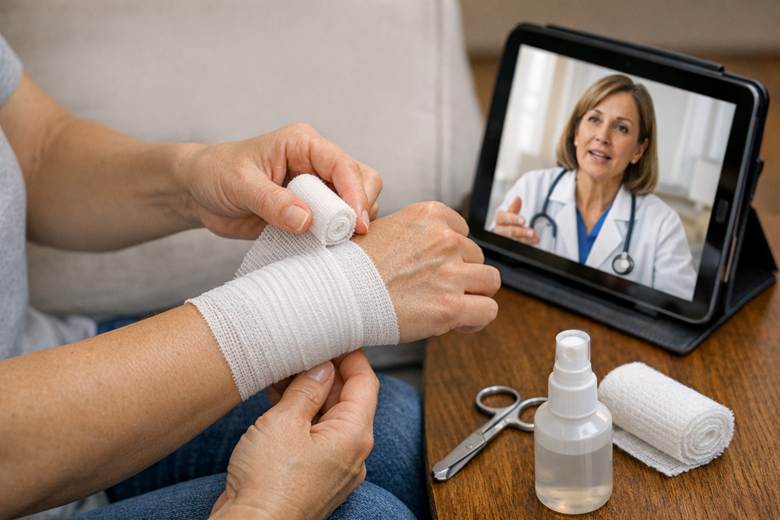
Chronic wounds are more common than many people realise. Research suggests that around 1–2% of people in developed countries may live with a chronic wound at any given time, and that number is expected to rise as populations age and rates of diabetes and vascular disease increase.
If you support an older adult, live with a long-term condition, or are recovering from surgery, you might already know how exhausting regular clinic visits can be – arranging transport, waiting for appointments, juggling family and work. It is easy to worry: “Is it really safe to manage wound care at home, even with video calls?”
Telemedicine and wound care are areas where technology is moving quickly, and that can feel confusing. At the same time, a growing body of studies shows that remote wound support can be as safe and effective as traditional face-to-face care for many people, when it is used in the right way.
In this article you will learn:
- What telemedicine actually looks like for wound care at home
- When remote support works well – and when in-person review is essential
- The common tools used (from photo apps to secure messaging)
- Practical preparation tips for your telehealth wound appointments
- Safety red flags you should never ignore
Table Of Contents
- What Is Telemedicine In Wound Care?
- When Remote Wound Support Works Well – And When It Does Not
- Telemedicine Tools You Might Use At Home
- How To Get The Most From A Telehealth Wound Appointment
- Safety Tips: Red Flags That Need Face-To-Face Care
- Is Telemedicine Right For Your Situation?
What Is Telemedicine In Wound Care?
Telemedicine simply means using phone, video or digital tools so health professionals can assess, monitor and advise from a distance. In wound care, that usually involves:
- Video consultations to review healing and discuss symptoms
- Securely sharing photographs of the wound
- Using digital tools to measure and track wound size and appearance
- Remote advice on dressings, skin care and pain management
Several studies have found that telemedicine in chronic wound management is no less effective than conventional face-to-face care for outcomes such as healing and complications, and may reduce travel time and costs for clients and health systems.
One trial, for example, showed that home-care nurses who could consult wound specialists via telemedicine helped their clients’ wounds heal faster than usual care alone.
The key message: telemedicine is not about replacing your nurse or doctor. It is about adding flexible ways for you and your care team to stay in touch, catch problems earlier and support safe wound care at home.
If you already receive in-home care services from community nurses or support workers, telehealth can complement those visits. Some providers combine home visits with remote check-ins, so you are not travelling to a clinic for every review.
For more complex needs, specialist wound care services may use telemedicine to review photos between appointments, adjust dressing plans and coordinate with your GP or hospital team.
When Remote Wound Support Works Well – And When It Does Not
Telemedicine and wound care are a good match in several situations, especially once an initial in-person assessment has taken place and a clear care plan is in place.
Telemedicine Is Often Helpful When
- The wound has already been assessed face to face and a diagnosis is clear
- You have a stable, slow-healing wound (for example, a long-term leg ulcer)
- You or a family member feel confident changing dressings with guidance
- Travel to appointments is difficult, tiring or expensive
- Your nurse wants to review progress between home visits
- You need quick advice on whether a small change looks worrying or not
Some digitally enabled home-based programmes for chronic wounds have shown improvements in healing time and quality of life, largely because problems can be spotted earlier and care is more consistent.
Telemedicine Is Not Enough On Its Own When
- The wound is new and has never been assessed by a clinician
- There is heavy bleeding or you cannot stop the bleeding
- You notice spreading redness, warmth, swelling or a foul smell
- You have a fever, feel generally unwell or confused
- There is sudden, severe pain or blackened skin around the wound
- A diabetic foot wound appears, especially on toes or the sole of the foot
In these situations, telemedicine can be a useful first contact (for example, a same-day video call to decide where you should go), but it must not replace urgent in-person care. Many national health services advise that deep wounds, bites, heavily contaminated injuries or non-healing surgical wounds should be assessed directly by a healthcare professional.
Telemedicine Tools You Might Use At Home
Remote wound care does not require complicated technology, but it does rely on clear pictures, secure communication and good record-keeping.
Here are some of the tools you might come across and how they help.
| Tool / Technology | What It Looks Like At Home | How It Helps With Wound Care |
| Video consultation platform | A secure video link sent by your nurse or clinic | Lets your clinician see the wound move in real time and ask questions |
| Secure messaging or portal | An app or web portal with login | Lets you send photos, answer symptom questions and receive written advice |
| Wound photography (phone or tablet camera) | You or your carer take regular photos | Creates a visual timeline so small changes in colour, size or exudate can be spotted earlier |
| Wound measurement app or digital ruler | Simple on-screen ruler or app that measures from your photo | Tracks whether a wound is getting smaller, staying the same or enlarging |
| Digital care plan and reminders | App, printed plan synced with reminders | Helps you remember dressing change days, skincare steps and follow-up appointments |
| Remote monitoring platform (for some clinics) | Clinic-managed system that stores your data and photos | Allows wound specialists to review multiple clients remotely and prioritise those needing help |
Good telehealth systems must also protect your privacy. Guidance for telehealth and wound photography stresses the importance of consent for images, secure storage, and restricted access to your information.
How To Get The Most From A Telehealth Wound Appointment
A little preparation can make your virtual visit feel far less stressful and far more productive.
Before The Appointment
- Check your tech
- Charge your phone, tablet or laptop
- Test the camera and microphone
- Make sure you know how to join the call or log into the portal
- Set up the space
- Choose a well-lit room
- Have a stable chair or surface so you can comfortably show the wound
- Ask a family member or carer to be present if you need help positioning the camera
- Prepare your information
- A list of your current medicines and any recent changes
- Dates of recent dressing changes or infections
- Any questions or worries you want to raise
Taking Useful Wound Photos
Clear photos are one of the most powerful tools in telemedicine and wound care. A few simple habits make a big difference:
- Wash your hands and remove the old dressing if advised, just before taking the photo
- Turn on bright room lights and, if needed, use the phone torch indirectly rather than flash
- Hold the camera steady and keep the wound in the centre of the frame
- Take at least two views
- One close-up so the clinician can see the wound bed
- One slightly further away showing the wound in relation to your foot, leg or arm
- Include a simple measuring tool (for example, a disposable paper ruler) next to the wound, without touching it
- Upload or send the photos as early as requested so your clinician can review them before your call
Remote wound programmes that rely on regular, standardised photos have been shown to improve monitoring and may reduce complications because subtle deterioration is picked up more quickly.
During The Call
- Use plain language to describe sensations such as burning, throbbing or tightness
- Mention any changes in sleep, mobility or daily activities caused by the wound
- Do not downplay issues such as odour, leakage into the dressing or pain
- Ask your clinician to repeat or write down key instructions if you feel unsure
Safety Tips: Red Flags That Need Face-To-Face Care
Telemedicine can safely handle routine wound reviews and many dressing questions, but some signs always deserve urgent hands-on assessment. Contact your usual healthcare provider, an urgent care clinic or emergency services (according to local advice) if you notice:
- Rapidly spreading redness or warmth around the wound
- Pus or increased, thick or greenish discharge
- A strong, unpleasant smell from the wound or dressing
- New or worsening severe pain that does not settle with your usual pain relief
- A wound that suddenly looks much deeper or develops black or grey tissue
- Fever, shivering, confusion or feeling very unwell
These can be signs of serious infection or blood flow problems that cannot be safely managed by video alone. Telemedicine can help you decide where to go, but it should not delay urgent care.
Is Telemedicine Right For Your Situation?
Telemedicine and wound care at home are not “all or nothing”. For many people, the most practical and reassuring approach is a blend of:
- Initial face-to-face assessment
- Regular home visits from nurses or support workers
- Telehealth check-ins to review progress, photos and symptoms
- Clear guidance on when to seek immediate in-person help
Evidence so far suggests that, when used thoughtfully, remote support can match traditional wound care for many outcomes and may even improve healing times and satisfaction for some clients.
Telemedicine will not replace the skill of an experienced nurse at the bedside. But it can:
- Make specialist advice easier to access
- Reduce the strain of travel for you and your family
- Help you feel more involved and informed about your wound care
- Support you to stay at home safely for longer
If you or someone you care for is living with a complex or chronic wound, it is worth asking your GP, community nurse or home-care provider what telehealth options they offer. Together, you can design a plan that respects your preferences, keeps safety at the centre and uses technology as a helpful extra pair of eyes – not a substitute for compassionate, hands-on care.